Saturday, December 16, 2017

What if School Camp was a game?


Preparation for school camp usually involves a bit of cut and pasting of timetables, groups and gear lists, some goal setting and perhaps some team building games.

This year I wanted to try and do things differently. Activated by my involvement in the recent Games for Learning conference, I asked myself the question "What if Camp was a game?"

My thinking behind this was that designing games is an effective way for students to learn content knowledge through process. Engaging with the content in this manner would generate discussion and new thinking.

So what did I want my students to learn? Our camp setting was changing from a "Hi-di-Hi" affair to more of a "Survivor" context. Students would be experiencing a range of physical and mental challenges that would require a wide range of dispositions. If we were prepared mentally for this, then surely we could reach our potential on this camp.

Table top role playing games (RPG's) are experiencing a bit of a resurgence at the moment and several of my students actively participate in games in this format. Most of us will remember "Dungeons and Dragons" a popular RPG from the 1980's that has since appeared in the popular Stranger Things series. These games require you to play in character and make decisions in the game based on that characters strengths, weaknesses and possessions. 

Students in my class were going to need to design an RPG in which the different characters of the game needed to have certain attributes that would help them deal with the challenges that they may face at camp. They were also going to need to come up with some possible scenarios that they might have to face.

First students would need to know how a table top RPG works and for that we played the game "Hero Kids". I got several students to be the game master for their groups and let them lead this part of the process. Learning through play is essential.

The ideation phase of the game design used Design Thinking so that character attributes and scenarios were closely aligned with what they would actually be experiencing on camp. And in regards to that, we did not give them much information about the camp itself aside from a verbal description of the setting and a list of possible activities. They even had to come up with their own gear list for the character.

The verbal description of the setting was purposeful as we wanted them to create a picture in their mind and then on a large piece of cardboard of the camp itself. This created wonder and reassurance for some but without giving too much away.

Play testing allowed other students to try out the games and have new experiences. Students became experts and teachers. The learning environment was a hum of collaboration.

So, how did this all transfer to camp itself? What we noticed as teachers is that students were able to problem solve, they offered support to others, they were resilient and showed growth mindset when faced with adversity.  Their conversations on camp mimiced those that they had had in the game.

There was only one point of confusion from a student in my class who asked "so are we going to have to roll a dice everytime we need to make a decision?" This made me smile.


Saturday, December 2, 2017

Te Wheke


Te Wheke - The Octopus

A representation of wellbeing (hauora) developed by Dr Rangimarie Turaki Rose Pere. Each part important to the whole.


Te whānau – the family
Waiora – total wellbeing for the individual and family (reflected in the eyes)
Wairuatanga – spirituality
Hinengaro – the mind
Taha tinana – physical wellbeing
Whanaungatanga - extended family
Mauri – life force in people and objects
Mana ake – unique identity of individuals and family
Hā a koro ma, a kui ma – breath of life from forbearers
Whatumanawa – the open and healthy expression of emotion

This year I have noticed that I have had to be more responsive to the hauora of my students before they have been able to learn. The make-up of my class is radically different to that of last year and also larger therefore it has taken me longer to get to know each child.

My reflective questions about his are:

With a move towards collaborative learning spaces, how do we ensure that all students have a meaningful relationship with at least one teacher?

What services do we need access to in our schools to assist with the mental wellbeing of a akonga?

Are we addressing the hauora of all of our students in our programmes or just the ones who need extra support?


My blue sky thinking about this would be for hauora to guide all decision making about learning, teaching, strategic planning, regulations etc. That those conversations started with "how will the student feel about this?",  "will this empower the student", "what does this student need to feel good about themselves?". I'd also love for us to have better access to psychologists, counsellors, health professionals and other specialists available for our students who do have extra needs in this area.  As teachers we are expected to take on so many roles, a lot of which require someone with a different skill set than ourselves. 

Back to Te Wheke. Do we as educators have enough of an understanding of what wellbeing is? Can we address it our learning spaces? Can it be acknowledged politically as an essential part of teaching and learning?


Sunday, October 15, 2017

Games for Learning Conference

Myself with Harko Brown and our manu that he showed me how to weave


It is quite special to attend an inaugural conference, but even more special to be part of the dialogue before the conference and also be asked to help facilitate a session.

The Games for Learning Conference held at Te Papa in September 2017 was the vision of Rachel Bolstad from NZCER. Rachel has been doing some research into this area for the past few years and in some ways, this was the accumulation of the many different relationships that Rachel made over that time. The focus of the conference was "equity for social impact".

Rachel was able to secure some pretty amazing keynote speakers, facilitators and participants to be part of this special occasion. Amy Freeden from the Cook Tribal Inlet Council that bravely invested the stories of her people into the game "Never Alone", Yasmin Kafai Professor from the University of Pennsylvania who had Seymour Papert as her mentor, Bron Stuckey a researcher, educator and consultant in the learning through games, and our very own Harko Brown who lives and breathes Ngā taonga tākaro (our cultural games). There were teachers, game designers, students, game players. Never before have I been at a conference with so much diversity.

As a teacher who already uses gameplay and game design in my practice the focus of the conference for me was to see other ways in which to do this. I was constantly reflecting on the question "how could I use this in my classroom?". This is also the stance I took while presenting my session on Game of Awesome with Aaron from Chrometoaster. I knew my audience; these teachers wanted something that they could do on Monday morning. We gave our participants permission to play, permission to be creative and adventurous and to try and use the GOA cards in different ways. I was really impressed at all of the new ideations of the game they came up with.
Much laughter and creativity in my GOA session


Some of my key thoughts/reflections/ideas from the keynotes and sessions I attended:

  • All you need is your imagination! Flying invisible kites is a game. Children are naturally playful and have great imaginations! (Harko Brown)
  • Learn knowledge or content through the game design process, the game at the end is just a bonus
  • A Cultural narrative in game design can be so powerful. Stories are powerful. Games are stories. (Amy Fredeen, Harko Brown)
  • Physical games are easy to change and modify as you just have to say the new rule out loud! (Ben Kenobi)
  • Situation and context help build a game, think about what this could look like e.g giant map/playing board, drama 
  • Games are systems thinking - simple or complex
  • There is a rich discourse when playing games. Listen!
  • Move over computational thinking - what we want to see and do is more computational participation. It is equitable, it is inclusive, it's integrated and it's fun! (Yasmin Kafai)
  • Gameplay can be drama, "teacher in role" and students living and breathing the context of a game
  • Games are life! They tell our stories, they are how we spend our time, they make us feel happy. (Harko Brown)
The group reflections at the end of the conference were incredible but it was a comment by Richard Durham (curriculum designer) that all my own reflections now come from (I wish I had written down exactly what he had said!) He mentioned that the conference itself had a different feel to it. It's true, over the 2 days we were connected to each other through common values. We all saw games as ways to connect to each other, to empathise, to care. I know that I left feeling inspired to continue using games and game design as ways to help my students explore ideas, have fun and learn from each other. 

Tihei mauri ora!

Flying our imaginary kites back at school

Tuesday, June 20, 2017

Cue the bees


Today I took part in a leadership coaching workshop with Jan Robertson. She told us a story about how she got into beekeeping. I quickly noticed that there were many metaphors within her story about education. This is exactly what she asked us to think about and extend afterwards.

The first metaphor for me was when she mentioned the special waggle dance that bees do to their bee friends that directs them towards the food source. Intentionally some of them waggle them in a different direction, slightly off target, in the hope that they may find new sources of food.

This immediately made me think of the term positive deviants. Educators who veer off from the set course. Educators who are innovators, collecting new information, trying new things. This could also apply to our students. The ones who think differently. I call these students the "divergent thinkers" and to me they are the ones that inspire me the most.

Jan got me to reflect on what usually happens to those that deviate from the norm. She suggested that these people are usually the ones who get their wings clipped. Bees cannot fly without wings. It is our job as leaders to nurture these people. We don't want all people thinking the same. We need people to challenge the status quo and to be curious about what lies beyond the normal parameters.

This metaphor really stood out to me as a former "lone bee" who got sprayed with insecticide one too many times and had to shut her classroom door and waggle around in secret.


The other metaphor that I connected with was that of the position of the beehive. Bees do not like to be moved. To move a beehive you can only move it approximately 1 metre a day otherwise the bees will get upset. But sometimes the hive needs to move in order to thrive.

I thought of the rate of change that occurs in education within our schools. Change is inevitable and we need to get comfortable at being uncomfortable. However change has to be done in well planned steps. To move the hive out of the shade into a brighter spot requires patient, careful planning and timing. We can't always move the whole hive in one go. Sometimes we need to persuade some of the bees to poke their heads out and have a look around first at the new spot.

Bees, hives and beekeepers provide a plethora of metaphor for education. Jane's point was that quite often we don't always remember what we learnt at a workshop or conference and that metaphors provide an inclusive way to connect with the subject matter. She even suggested we use metaphor to help our colleagues unpack their feelings or frustrations. This reminded me of Diti Hill's "Theory as story". The notion that personal narratives are an important part of our practice. Metaphors are stories that help us connect.


Monday, April 24, 2017

Learning in the Fast Lane - Success Starters

Unpacking Chapter 3 "Success Starters" from:

Learning in the Fast Lane
by Suzy Pepper Rollins (201$


"The opening minutes of a lesson hold tremendous potential for all learners"


The brain is ready for new learning at the beginning of a lesson, fades a bit then picks up at the end. Review work at the beginning of the session does not capitalise on the brains potential for new concepts in the first few minutes of a lesson.

The more novel and interesting the first part of the lesson is, the more the brain will hold on to new concepts and keep them stored as being important. Hands on is preferable as the retention will be higher. Routine will only flatline the brain's involvement. Keep things interesting and unpredictable but find ways to connect with student's prior knowledge, remembering that everyone's is different.

We are aiming for authenticity and relevance in this part of the lesson. It has to engage every learner and not take too long.

Some ideas for success starters:

1) Role play

Put the students in charge. Get them to make the decisions and experience the "problem". Critical thinking and decision making are necessary. Put the drama into the learning.

2) Surveys

Connect the learning back to the student. Are relevant and answers can be shared with the whole group.

3) Prediction

Is all about student's anticipating new learning. Sorting is a good way to do this. This could be sorting items, words and/or pictures. Student's are keen to know if they are correct.

4) Questioning

Questioning allows us to be curious. Students can create their own questions about a topic and share them with a group. Question starter cards (who, what, why, how etc) can also encourage students to engage in questioning.

5) Brainstorming

Sharing each others thoughts and knowledge in a range of brainstorming activities promotes high interest and participation. Those that don't know much yet will start picking some key ideas up from other students.

6) Concrete Representations

Using equipment in maths or science, looking at photos, graphs, videos, picture books to engage interest and strengthen learning.


Some things to reflect on when planning lessons.


Thursday, April 20, 2017

Learning in the Fast Lane - Chapter 1

Learning in the Fast Lane
by Suzy Pepper Rollins, 2014

A literature review...


Key idea behind ideas in the book:

That high impact instructional approaches will effectively improve outcomes for all students including those who are struggling. Targeting only the "tail end lag" with remedial gap filling will not help accelerate learning.

Chapter 1: How can we help students with gaps from the past succeed today?


  • Prior knowledge frees up working memory (Hirsh, 2003)
  • New concepts need to be connected to existing schema
  • The misconception is that to learn new things, one must go back and "fill the gaps"
  • Going backwards decreases student motivation
  • Acceleration is about having success in the present by preparing the student for what is happening that week
  • Acceleration puts students in the "fast lane" as they already have the prior knowledge and the basic pre-requisite skills ready to learn the new content alongside their peers
  • Vocabulary is key - students need to know both the pre-requisite vocabulary and the new vocabulary as it will help to link with prior knowledge.
  • Student confidence and participation will increase when they are prepared for this new learning
  • Time needs to be set aside to work with the acceleration group
The framework for Acceleration

Step 1: Generate Thinking, Purpose, Relevance, and Curiosity
Hands on starter activities that get students wondering. Concrete before abstract. Real world examples and thinking. Success starters.

Step 2: Clearly articulate the learning goal and expectations
Explicit and student friendly. Helps define the purpose of the learning.

Step 3: Scaffold and Practice Essential Prerequisite Skills
"Students could master this if they just knew xyz". What are the high priority gaps? Create scaffolds for success.

Step 4: Introduce New Vocabulary and Review Prior Vocabulary
What does it mean? What does it look like? Need multiple representations. 

Step 5: Dip into the New Concept
Needs to be something that the rest of the class won't see - cannot repeat the learning experience. Idea is that the student can say during the class session "I know something about that!"


Tuesday, February 14, 2017

Starting Collaboration Reflections

What's on top?

  • Creating times in the day/week for normal classroom activities that are not curriculum based (hidden curriculum)
  • Managing use of learning assistants as in the mornings there are 6 adults in the space
  • Whole group sessions - split into 2?
  • Getting to know students who are needing those strong relationships to ground them
Innovative Learning Spaces (ILS) are really bound by context.  The context will guide the programme. What may work for one school or class may not work for another. I am fortunate to be working with another teacher who has a shared understanding of how children learn and what an effective year 6 programme looks like.  We have 2 other teachers that support us that also have this shared understanding.


My wonderings to share with my teaching team:

  • If there could be a block each week that isn't a shared learning time?
  • If the structures that we set up for literacy and numeracy could be explicit about how the Learning assistants are used?
  • If we could give feedback about having less Learning Assistants in the first 3 weeks as we establish our collaborative practices?
  • If areas outside of literacy and numeracy could/should be done in smaller classes?
  • Would more time with my smaller class help those students who need to anchor themselves and find their place?
Actions:
  • Gather some student voice
  • Do some reflection with my teaching team

Monday, February 6, 2017

Intentions for 2017


Kererū - my favourite bird and good luck charm

I like the word intentions rather than goals. Goals imply that you have to succeed, check it off the list, reach something. I think that everyone has the best intentions at the beginning of the year and that intentions can lead to best practice - a living, breathing and continual state of being.

My first intention is to look after myself this year. I intend to get up early each day and begin with a walk or run to get my circulation going. I started doing this in the holidays and immediately noticed a difference in my state of mind. I also intend to drink more water each day, I find that I get so busy that I forget to stop and hydrate which isn't so great for the body or the mind.

My second intention is to make sure I have work/life balance. To do this I intend to set myself some specific tasks for before school (a time of day where I don't seem to get anything done) and to use google tasks to keep track of what needs to be done. I also want to utilise some of the lunch hour and finish my work (if possible) before I go home. I'd also love to have my weekends free, I know that this one may be a little harder to do each week but the intention is there!

Both of these intentions are to do with my hauora (my health).

Hauora is comprised of 4 areas:

Taha tinana - physical well-being
Taha hinengaro - mental and emotional well-being
Taha whānau - social well-being
Taha wairua - spiritual well-being

(Ministry of Education, 1999)

To be the best teacher for my students I really need to look after all 4 areas.

I have a special place that I like to go to clear my mind and recharge, and that is Zealandia wildlife sanctuary. As a member I can go whenever I want and spend as long as I like. When I am there it is possible for me to not think about school.

This weekend while I was taking a track away from the crowds I saw so many juvenile birds - tūī, tieke, piwakawaka and large flocks of pōpokatea. I spoke to a family that passed me on the track and they had seen nothing. This got me thinking about the need to be observant in both life and at school. We need to take the time to notice, to be present and to see what we can take away from the experience. Being present doesn't have to mean being seen and heard, for the quieter I was, the more birds I saw. I intend to take this quiet presence, this notion of observation into the learning environment.

And lastly as we merge our year 6 classes completely and become a learning whānau of 61 students and 2 teachers I intend to spend quality time building relationships with the students and working collaboratively with my co-teacher. I intend to use the quiet observation to help understand the learning needs that exist in my classroom, noticing the small things and making sure that they too are having their hauora needs met.

Wednesday, October 12, 2016

Podcast review: Games are good for you!

Note to Self: The Secret to Making Video Games Good for you 

Produced by WYNC studios 

Cross posted at Gamefulpraxis.com

Quite often gaming is looked at in a negative way so it is refreshing to hear research that frames gaming in a more positive way. This particular episode is an interview with Jane McGonigal a researcher at the Institute for the Future. Yes this is a real place and yes I want to go there!

Jane's research focuses on the neurochemical changes that happen when we are playing and how we can better understand how our brain works when we are playing. How can we "hack" this experience and apply it to our real lives in those moments when we need more resilience?

To quote Brian Sutton Smith, Developmental Psychologist and expert in play:

"the opposite of play isn't work, the opposite of play is depression" 

McGonigal further unpacks this quote to state that when we are playing games the positive emotions that we experience such as; joy, wonder, excitement and success, are the opposite of the clinical diagnosis for depression. Woah! Well okay, that's a bold statement! But to give it even more credit, this is research based on which areas of the brain area stimulated/under-stimulated in both states!! Maybe video games really are the new self help! I'll be reaching for the iPad next time I'm feeling a little down... (my wondering here is if anyone has done research that measures shift in emotion when going from sad to playing games???)

Candy crush saga, Bejewelled, Solitaire... you know those games that you just play that don't seem to be of any value yet you spend hours playing while you take a break from reality? Are they actually valuable then?


Well, when we are able to stop thinking about things that are bothering us and take a break from reality we are incorporating techniques from both cognitive behavioural therapy and meditation. I interpret that as gaming as meditation, gaming as a healthy way of disassociating. I can hear your brain right now crafting an argument against this and that's cool because this is all sounding way too good right? McGonigal also did a meta-study of 500 pieces of research about gaming and wellness. Half of those found negative correlations, half positive. The key to positive outcomes was the ability to relate game play to reality in a meaningful way. If you were unable to do this games became an escape from reality, a downward spiral. Life gets worse, play more games = unhealthy outcomes. 

Unfortunately this is the picture of gaming that is painted in the media, and is on the mind of parents of teenagers. That is not to say that this negative image doesn't exist, it's just really hard to break when you are someone like me trying to use games and game design in education in a positive way. McGonigal has found research that supports the idea that escapism games are okay for us in short bursts. They can even help us break habits like sneaky snacking (I am actually keen to try this one and am tempted to put a post it note on the packet of biscuits saying "play a game instead"). She also points out that self-regulation is optimal, play the game to help you but know when you've had enough. Choose the game and see what it does for you. Jane actually designed her own game to help her through a bad case of concussion.

Her advice to parents is also very poignant. Do not shame your children about the games that they play. Do not tell them they are wasting their time or that they should be doing something else. If we frame gaming negatively like that then we stop that relationship between gaming and reality that was mentioned earlier. They will think games are for escape and they will head down the negative path. Instead ask them: "what have you gotten better at since you started playing this game?" Be interested in what dispositions they can transfer into their real life. If a child can talk about these abstract ideas then they have made that link, if they are referring only to things that exist within the game then they need us to help them bridge that gap.

The last question that Jane McGonigal was asked in this interview related to games and addiction. Addiction as a "thing" is currently being challenged in the science world and the latest research is saying that addiction is a goal orientated action that gets stuck on one particular thing. With gaming the person needs to transfer those things that give them that "buzz" into other activities so that they don't get stuck with that one thing that gets them feeling like that. That makes me sense to me. Perhaps we need to be more aware of how we can shift children and teenagers especially towards other similar stimuli?

There are so many games out there that challenge people and build on skills needed in the real world. When you play online with and against your friends there are also many benefits. A good game has transferable skills. Games can be good for you but ultimately it is you, the player that needs to make decisions about what you play, why you play and how long you play for. Own your gaming and make it part of your life not an escape from it!


Sunday, September 4, 2016

Coaching

A coach...

The image I usually think of is associated with sports. In particular with my own sport which is football. The coach is the person who at the beginning of the season you despise as they put you through numerous fitness sessions and by the end of the season you share jubilation with as you win each game. There is a specific goal to be achieved and they are with you the whole way directing you to improve your game.
Here is a photo of my old football coach letting us use him as target practice.

However, in educational terms a coach has quite a different set of skills. Coaching is a process that allows you the "Coachee" to meet your goals. A coach does not tell you the answer to your problem or even offer a suggestion, they are simply there to guide you through a process.

The image that comes to mind now is one of a funnel; starting with a large problem and narrowing down to a manageable time fixed action.


The process follows 3 easy steps:
A - Aim
R - Reality
A - Action

Part of our workshop with Mark Sweeney was to have a go in both roles as the coach and coachee but also as an observer. I found this process immensely valuable.

My problem/Aim:

Shifting several students who are progressing in writing but not at the standard yet (a common goal).

Action:

To introduce 3 key writing ideas based on expanding vocabulary over the next 3 weeks.

Achievable - yes!


Tuesday, August 16, 2016

Design Thinking FAIL


We all get excited when we have an idea about how to engage our students and innovate teaching and learning. What a great idea we think! But what if it all goes wrong?

Yesterday I had a design thinking fail. The process surmounted to terrible irrelevant ideas and even more terrible feedback on them. I was so disappointed. Why did it fail? What did I do wrong? Why can't these students be creative?

But rather than give up completely (and trust me I was feeling quite deflated after this experience), I decided to go back through the process and see if there was a step missing for them or something we hadn't done enough of.

Empathise

I had spent quite a bit of time building empathy of our target groups (refugees, homeless and those in poverty). The students had identified their assumptions and challenged each other on them. They had also explored what others were doing to help these groups. There had been a significant shift in student's awareness of the needs of these groups. I was confident that the students knew their target group well.

Define

Our overall context for our inquiry is sustainability.  When discussing what this means in the context of people. We grappled with some tricky ideas (keeping in mind these students are Year 4-6). I thought each group knew of an area of need for each group.  This is where I was wrong. My students had thought narrowly in the iteration stage because they didn't have a handle of what problem they were needing to find solutions for. Because of not knowing the problem they then forget about the user and therefore produced ideas that were half-hearted.

So this is where we began today.  Using the sentence starter "How might we..." they were able to articulate what some of the needs were. They recorded their groups "How might we's" and then chose one each that they felt they could begin to ideate on.

Ideate

The aim was 20 ideas in 2 mins (I tried to put the pressure on so they wouldn't hold their ideas lightly) but they asked for 5 minutes to complete the task. The all then shared their most far out, costly, time consuming idea. This broke some barriers as the more ludicrous the idea the more excited I got. They then reflected on their list to find their easiest fix before identifying their darling. The darling idea needed to be the one they could see their group working together on. Finally some ideas worth exploring!

We are now ready to Prototype!


I think that it is really important to document and share the failures as much as we share the successes.  Teaching isn't meant to be perfect and a design thinking mindset also would suggest that reflection is important. I was able to reflect on the process and find the missing piece. When I saw one student in particular light up when she realised that her idea was a possibility and that she had the backing of the others in her group, that is when I realised it was all worthwhile.

Monday, July 18, 2016

EdchatNZ MOOC Portfolio

EdchatNZ MOOC

1390746644.png
Introduction
I have to admit that I began this course with blue sky thinking that plunged into a dark discontentment as the content opened my eyes to a bleak and complex future. I become dark and cynical and then I got scared. The future and talking about the future is rather scary. But to talk about the future we must turn to the past...

107817356.png

Assumptions
My assumptions were that everybody understood the purpose of school. That even I understood the purpose of school. I also assumed that change was manageable and could happen in my lifetime. This bubble was quickly popped as I realised that society’s view about the purpose of school was not ready to change with as much vigor/passion as I was (am?) willing to give it. There is still so much out of my control. People are the sum of their experiences and everybody has experienced being in school. There is all drag and no lift when people discuss school. Most interestingly, those who I tried to engage in the discussion were apprehensive about giving the “right” answer, like they weren’t qualified to have opinion on the subject. Not what I expected! Maybe I assumed too much community voice and perhaps there is not enough. The ladder of inference has everyone (including teachers) stuck in a loop of past experiences. To move forward we need to examine our values closely.

244894467.png
The future
I took a break from facebook for a whole day recently. It took sheer willpower to disconnect for the day. I missed 2 birthday notifications and it took me a good hour to catch up on what happened that day. But what an awesome day I had. I got sh!t done!
The unplug from the system task made me realise how much we rely on automaton. Everything we do is connected to technology. When the media says “robots will take over our jobs” they ain't kidding! We strive for efficiency and speed yet the contradiction is that we are so tied to the system that we are missing out. I don’t think teachers will be put out of a job though. This article and quote resounded with me:
The new rule is that if you are a participant, you are, by default, a moderator, a curator and an editor for others. (Kilpi, 2016)
I like to think of teacher’s fitting this role no matter what the context or content, no matter what “school” ends up being. Not everything needs to be automated. Humans are still important.
“Love. That was what she had that IT did not have.”
-Madeline L’Engle, A Wrinkle in Time

3436753709.png
Science Fiction/Speculative writing has made predictions that are scarily true. I am still in awe with this particular quote as this book was written in 1973 right before personal computers came into our lives. L’Engle recognised that technology could never take the role of a human. That to be human is the ability to reason and empathise.
There is purpose within school to help our students survive in an uncertain and contradictory world. We need to them to be able to connect and disconnect, make and consume, work and play. But most importantly I believe we need to humanise them. They need to be social, to use language and symbols, and keep using their incredibly complex brains. On a more philosophical level this includes building relationships, problem-solving, increasing reliance, being resourceful and expressing themselves creatively. This is one aspect that has not changed for me during the course. I felt strongly about this before and perhaps even more strongly now because I have engaged with bigger ideas about the future, about education and about being a human. Humans, not technology, have the ability to shape the future.

8469505028.png
Knowledge
Knowledge is a hard concept to pinpoint and I think that is because it is contextual. I also think that our view of what constitutes knowledge has changed. David Weinberger pointed out that we have so much access now to information via the internet and we now have to shape and filter that knowledge and apply thinking to it. Our students need to learn how to do this and find information that is valuable and credible. This increase in content is also rather exciting. We can dip into new knowledge and we can dip out. To paraphrase Weinberger in his EdchatNZ webinar “this better to have MOOC’d a bit than not have MOOC’d at all”. We can also get overloaded with knowledge. How do we determine what is important? Again this comes back to the curation of knowledge. That we can curate knowledge for our students and co-create it with them too. So then the argument becomes “Who decides what knowledge is important for school?” This I feel comes back to what we value in society and in our communities.One person/government cannot decide this and this will look different in different communities. Literacy and numeracy - yes, we’ve already decided that these are important but what it is to be literate and numerate should be discussed and debated frequently within our own schools and clusters.

Futures thinking
To quote myself:
Bad decision making from current political leaders and so called experts leads to disarray and chaos. From the ashes rises a new group of changemakers ready to take on these problems and shift the focus to future-ready solutions. It's the hacker culture, its people being resourceful and showing resilience. Power to the people! - MOOC entry Week 7

There is hope! There is a horizon! Futures thinking allowed me to see that the most important future is the one I can shape, the one I can reach out and touch right now. I don’t have a crystal ball but I do have the ability to make immediate changes that will have an impact tomorrow. Again, empathy is at the heart. I can determine the future based on the actions I make today for my students (Keri Facer).


5738805421.png

Where to now?


There is huge potential in the role of tools like design thinking, spirals of inquiry and fail-safe experiments to make small yet important changes to that way that I teach. All of these are processes, not outcomes and because the world is changing we need to be adapting as we go not finding permanent solutions. I will use these tools to help me make future-focused changes that are within my reach. I would really like to engage in more discussion with a wider group of people about the themes of future education. It is scary to think that decisions are being made in schools all over New Zealand that are not being informed by current thinking and discourse. I wish to be the knowledge curator, to get other people thinking and to make these ideas and resources accessible to them. I need to keep asking the questions, laying the wero for others to join me.

4351407055.png

Monday, July 4, 2016

Diving into the pond


This blog post is cross-posted on WellyEd.

Sometimes you have to be the first to dive in. In a small pond you won't find much and your ripple maybe me more of a splash or you may only just wet your toes. That is what it was like to be a Pioneer Educator in the Network for Learning (N4L) Pond. It was a completely new space to collaborate in and the temperature hadn't quite reached bath tub for me.

Fast forward two years and that Pond is a bit bigger, a lot warmer and full of things to discover. I have rediscovered the Pond and I'm swimming around hoping others will join me.
So what is the Pond. The Pond is a professional space to share resources, lesson plans and ideas around teaching. The Pond is not Facebook, or Twitter, or like any other social media which I'm pleased about. It is also only for New Zealand educators. The Pond is there to use as you choose so I am going to outline how I use it:

1) I have added the chrome extension for Pond onto my browser so whenever there is a news article or webpage that I think "aha! that would be good for <insert learning objective here>" I add it to the Pond and to one of my buckets.

2) I have set up some buckets within the Pond to collate resources in so I can find them easily myself and direct my colleagues to them too.

3) Users outside the Pond can use the Pond still as a search engine. I use a special hashtag on my buckets that I want my students to be able to find. They simply put in our class hashtag and the buckets pop up.

4) I search within the Pond and find stuff to add to my buckets.

I really like it because it makes my searching and collating purposeful. I can easily find things I've saved and alert others to it. My wish however would be for more educators to contribute to it. Why should we hold on to our precious lesson plans, web links and resources? To build a Community of Practice we must be willing to share.

So my challenge for you this week is to take a risk, dive in, the water's good!

Wednesday, June 29, 2016

Since when did I become a gamer?

80's gamer wearing Atari vest. I'd totally rock this look.


This year my interests in education have led me back to the future. My thinking is sprinkled with automaton, science fiction, gaming and the Anthropocene. I blame Danielle Myburgh and her brilliant EdchatNZ MOOC (massive open online course) on the Future of Education. I blame Rachel Bolstad for wooing me with Enders game at a Core Breakfast 3 years ago and then attacking my brain cells this year with Ready Player One.

I have game on the brain.

So much so, that I watched two gamer documentaries back to back yesterday. I know! Major geekdom. (For those that are interested they were Atari: Game Over and King of Kong).

Gaming is fascinating.  Atari itself created the possibilities of the computer through exposing young players through gaming. They were such simple looking games which required so much complex thinking. Like the hidden easter eggs, imagine how cool it would be if you found one of them. Playing games has so much complexity.

I introduced some of my Year 6 students to the first introductory chapter of Ready Player One by Ernest Cline. It opened up a conversation right at the very heart of educational future. What if the world does get so bad (tweens and teens love all that dystopia) that we are going to have to "plug in" to a virtual reality? Are we going to be able to influence reality while in the virtual world? I was so surprised at how much my students knew about gaming and it's history. Gaming just about playing games, it's a culture, it's a knowledge bank.


via GIPHY

Science fiction is freakily predictive. It's a medium in which big future issues can be explored. Perhaps it's a good way to talk to students about possibilities? These books have predicted the future or should that be reframed as the possibilities that can happen.

My class have also been playing and reviewing Curriculum for the Future. In this game they help convince a panel of adults what the new school curriculum should be. These curriculums are different from the ordinary and show some fantastic possibilities. "Why don't we do some of this stuff now" - said Miss 10 and I agreed.

So right now I am seeing gaming both digital and table top, as being ways in which we explore ideas, work with each other ("I love how interactive my learning is when I play a game with someone" - Mr 11), create new possibilities and have some fun. Play has uncertainty and we need to experience this to prepare us for the uncertainties we are yet to face.

Call me a gamer if you wish... Games are the key to our future.

Thursday, June 16, 2016

Eduignite Term 2 Pukerua Bay School

Sharing practice with others is a powerful and engaging way to think about your practice. That's why I find Eduignite evenings so enjoyable. A recap of the speakers for evening can be found in the blog post I wrote for WellyEd.

My talk was linked to my latest teacher inquiry around mathematics. My speaker notes are underneath.


  • Your past has an impact on your future. What do you value? I haven’t had a successful pathway in mathematics. In fact, most of my maths learning has occurred from me teaching students and from students teaching me. 
  • I teach a year 6 class who are all Stage 7 & 8 learners, some have maths ability beyond the primary school curriculum. They Have been told from probably a young age that they are good at maths. Maths has been a competition to get through the stages, to beat each other, to be the best 
  • Our school professional development focus has been on mathematics. Teachers wanted to move away from the Numeracy Project and invigorate their maths teaching. We have had several sessions with Gillian Kissling from Cognition Education unpacking our values, our strengths and our future 
  • The latest research says that our brain has the ability to change. The brain has plasticity, synapses are firing when we make mistakes. Growth mindset is a real thing. 
  • The children in my class are very good with symbols. They can use them to get the right answers but do they understand what they are doing? The research shows that to be a good mathmatician you need to activate both the visual and the symbolic pathways in the brain.
  • When we talk about the visual pathways we are talking about estimating, drawing and visualizing information. It makes it easier for us to see the patterns. This has been a particularly powerful learning experience for our challenged students including those with dyslexia. 
  • As well as our maths classes we get together as 3 year 6 classes once a week and do mixed ability problems that focus specifically on the visual aspect of learning. This has been very successful for raising the confidence of learners and implementing the Talk moves and focus on using materials, making drawings and looking for patterns This is what we focus on a lot. 
  • We need to be challenged but it is not a game where you are trying to get to the Ender dragon.
  • If maths is about communicating how do you get the students to talk to each other about their thinking? How can you help them see that maths is about arguing ideas and challenging each other's thinking? 
  • We use Talk moves. These are a way for you as a teacher to guide students thinking but also for students to have a scaffold for their discussion. Some have hand actions. Students are taking risks and accepting challenges. For example Getting a student to revoice another student’s thinking is very powerful esp if that original person is less confident 
  • There is some beauty in not knowing what is going to happen. What you plan isn’t always what you teach. This organic way of teaching and learning has meant that we don’t learn in silos, we learn naturally, as it occurs 
  • This is an example of a problem that we would work on in groups and discuss as a whole class. Working together to solve this puzzle allowed for different perspectives but also allowed for incidental learning to occur. Those who are confident with equivalent fractions scaffolded the learning of those who were not. 
  • Sometimes the learning that comes out of our discussions far exceeds the expectations of our level of learning. I am enjoying the collaborative nature of learning, that I learn with the students and that I am not the fountain of all knowledge. I have learnt so much this year from my students and they are always amazed when I tell them that I don’t know the answer. So tonight I challenge you to think about your maths programme, does it encourage competition amongst students or does is promote collaboration?

Training the teacher


I've always thought that a good way to influence change and transformation in education would be by taking on a student teacher. I know from my experience that an Associate teacher shapes who you become as a teacher. A supportive learning environment where you can take risks, make mistakes and reflect openly is ideal.

I knew that I wanted to provide this environment to the student teacher I took on this year. To prepare for this, I reflected on my student teacher experience and initial thoughts with my mentor. This was helpful to pinpoint the purpose of the placement for both parties. I saw this opportunity as a learning experience for me too and a chance to reflect on my own teaching practice.

From our first meeting, I made it clear that my philosophy of teaching was based on relationships and that it was okay to spend time getting to know the students. I didn't want my student teacher to feel the need to teach right away. She spent the first week just being part of our class, talking to students and finding out about them. Relationship building proved to be the most important thing she did all placement. It was the foundation on which she built her teaching.

My student teacher drove the placement. It was her placement so she needed to do what she needed to develop. Interestingly enough we ended up in a team-teaching situation for quite a lot of the time. Students saw us working together and respected us both in our teaching capacity. They saw us as learners too.

So my reflection on this experience has led to me seeing the potential for teachers in training and beginning teachers being in team-teaching partnerships. For what better way to learn? It's collaborative, reflective and benefits students. For me as a more experienced teacher, it taught me to let things go, how to ask reflective questions and how to address non-negotiables. We want our students to work collaboratively together; we encourage tuakana-teina so it makes sense to model this as teachers. Plus it was fun! Lot's of laughs were had, successes shared. And I'd do it all again.

Monday, May 16, 2016

Taking risks in maths teaching - QLC

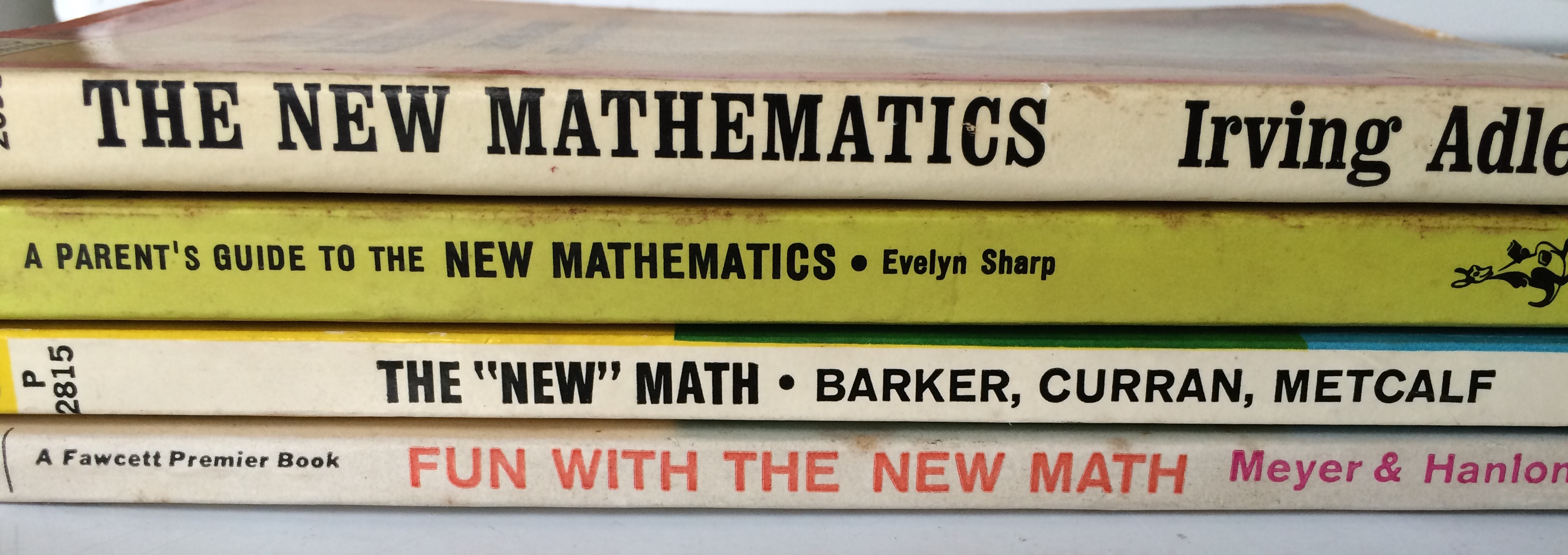
Newer than 1960 math of course...

For today's quality learning conversation (QLC) we were asked to focus on mathematics as this has been our professional development focus. Having a shared topic immediately had us all engaged and asking questions to help further our thinking. Interestingly all of our wonderings/concerns/fears were the same! So let me unpack them a bit further in my context.

1) When trying something new there is always uncertainty about whether you are doing the "right" thing. There is also the added pressure of external reporting. What exactly does assessment look like when you totally flip the way you are teaching? What does that look like when planning? Are we using the right assessments?

2) What does the structure of the lesson look like now? What does the week look like? How on earth do you fit everything in?

3) How do I ensure I am meeting the needs of all my learners? How do I know that the quiet ones (less vocal) are learning? How do I spread myself to be in more than one place at once?

So these are the questions I am asking at the moment and it seems that everyone else is asking these too. From our conversation I have decided to focus on a couple of things:


  • If we value this new way of teaching maths how do we show that we value it in our reports? I need to be gathering some anecdotal notes about the way that students are collaborating, participating, discussing and risk-taking.
  • I need to focus on the above things as positive outcomes and trust that this will be reflected in summative assessment later in the year. I have already seen huge changes in the way that students are approaching maths tasks and I really value the culture of being able to take risks, challenge and value each others thinking and learning.
  • Talking chips (thanks Kelly!) could be a way to increase participation of those who are being quieter and/or make those with a lot to say to hold back a little to allow the quieter ones to have a chance.
  • Perhaps the planning cycle looks different for all levels/contexts. I am thinking that once my Stage 7/8 learners have truly explored fractions, decimals and ratios then the rest of the year will be full of rich open tasks that weave in their learning with the strands. I look forward to the possibilities!
I have absolutely LOVED the mathematics PD that we have had so far and totally believe in it's value. Like any new thing it will take time to implement and feel comfortable with but it is incredibly awesome to have the freedom and flexibility to take those risks and try things out.