Showing posts with label QLC. Show all posts

Tuesday, February 14, 2017

Starting Collaboration Reflections

What's on top?

  • Creating times in the day/week for normal classroom activities that are not curriculum based (hidden curriculum)
  • Managing use of learning assistants as in the mornings there are 6 adults in the space
  • Whole group sessions - split into 2?
  • Getting to know students who are needing those strong relationships to ground them
Innovative Learning Spaces (ILS) are really bound by context.  The context will guide the programme. What may work for one school or class may not work for another. I am fortunate to be working with another teacher who has a shared understanding of how children learn and what an effective year 6 programme looks like.  We have 2 other teachers that support us that also have this shared understanding.


My wonderings to share with my teaching team:

  • If there could be a block each week that isn't a shared learning time?
  • If the structures that we set up for literacy and numeracy could be explicit about how the Learning assistants are used?
  • If we could give feedback about having less Learning Assistants in the first 3 weeks as we establish our collaborative practices?
  • If areas outside of literacy and numeracy could/should be done in smaller classes?
  • Would more time with my smaller class help those students who need to anchor themselves and find their place?
Actions:
  • Gather some student voice
  • Do some reflection with my teaching team

Monday, May 16, 2016

Taking risks in maths teaching - QLC

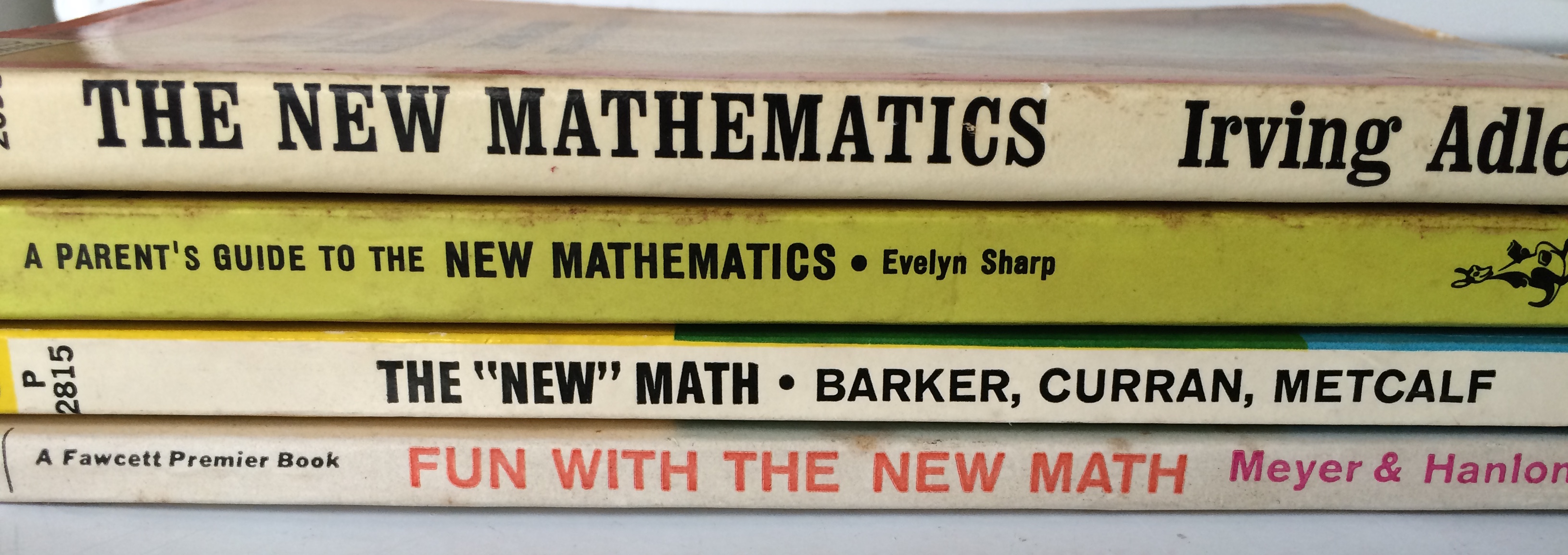
Newer than 1960 math of course...

For today's quality learning conversation (QLC) we were asked to focus on mathematics as this has been our professional development focus. Having a shared topic immediately had us all engaged and asking questions to help further our thinking. Interestingly all of our wonderings/concerns/fears were the same! So let me unpack them a bit further in my context.

1) When trying something new there is always uncertainty about whether you are doing the "right" thing. There is also the added pressure of external reporting. What exactly does assessment look like when you totally flip the way you are teaching? What does that look like when planning? Are we using the right assessments?

2) What does the structure of the lesson look like now? What does the week look like? How on earth do you fit everything in?

3) How do I ensure I am meeting the needs of all my learners? How do I know that the quiet ones (less vocal) are learning? How do I spread myself to be in more than one place at once?

So these are the questions I am asking at the moment and it seems that everyone else is asking these too. From our conversation I have decided to focus on a couple of things:


  • If we value this new way of teaching maths how do we show that we value it in our reports? I need to be gathering some anecdotal notes about the way that students are collaborating, participating, discussing and risk-taking.
  • I need to focus on the above things as positive outcomes and trust that this will be reflected in summative assessment later in the year. I have already seen huge changes in the way that students are approaching maths tasks and I really value the culture of being able to take risks, challenge and value each others thinking and learning.
  • Talking chips (thanks Kelly!) could be a way to increase participation of those who are being quieter and/or make those with a lot to say to hold back a little to allow the quieter ones to have a chance.
  • Perhaps the planning cycle looks different for all levels/contexts. I am thinking that once my Stage 7/8 learners have truly explored fractions, decimals and ratios then the rest of the year will be full of rich open tasks that weave in their learning with the strands. I look forward to the possibilities!
I have absolutely LOVED the mathematics PD that we have had so far and totally believe in it's value. Like any new thing it will take time to implement and feel comfortable with but it is incredibly awesome to have the freedom and flexibility to take those risks and try things out.

Thursday, March 31, 2016

QLC: Death by Digital Documents

Something I am grappling with at the moment is how to balance the use of technology in my classroom. I have come from a 1:5 ipad environment to a 1:1 chromebook environment. The students are comfortable using the tool but I haven't quite found those systems that fit my teaching and my routines. For example, giving feedback on writing in books that get handed in... something I thought I wouldn't miss, well it is much easier to read and comment and be organic with writing in the paper form.

So discussing this issue with my colleagues allowed me to see some possible next steps and to give myself permission to provide that balance that will meet the needs of both myself and my students.


  • Not all work needs to be done digitally (permission granted!)
  • Get them to print stuff out - blend digital with pen
  • Have a look at what other teachers are using to manage so many online documents
  • Use the Hapara workspace 
  • Try out some tools like kaizena for voice notes.
There is no quick fix or perfect solution but I am interested in how other teachers manage the constant online viewing and storing of google docs?


NB: this is part of my ICT goal for this year around "What exactly does blended e-learning look like in my classroom?"

Monday, February 15, 2016

QLC: Managing Learning Assistants

Source: Pargon

My reflective question for today's Quality Learning Circle (QLC) was around managing learning assistants in the classroom. The purpose of the QLC group is to be asked questions to further reflection and perhaps solve the problem or come up with possible solutions/outcomes.

My current class has one ORS student and 2 students with identified learning needs. I currently have 2 different learning assistants 3 times a day.  I have found the last two weeks rather awkward having to juggle getting to know my class with planning for the LA.

My overall goal is to create an inclusive classroom that meets the needs of ALL the students, not just those with identified learning needs. I hope to use principles from Universal Design for Learning (UDL) to help me accomplish this.


Reflective actions:


  • That I need to meet with my LA's to give them information about what underpins the culture and learning in my classroom. I hope that by doing so they will realise that my decisions and actions are not arbitrary. I need them to understand that I am constantly observing and collecting information on those students that helps determine their goals for learning. I do not rely on previous documentation to inform my actions and that my focus right now is building relationships with my students. 

  • One of the particular ideas that I want to communicate is that student voice is very important and that I put a lot of thought into how to balance the power dynamic between myself and my students.

  • To be effective, long term, my LA's would know what there role was and would come in a get on with the job.

  • That a particular goal would be to decrease the amount of support the specified students received therefore adopting a model in which the LA's time was used to assist all students.

  • I may ask all of my students to reflect on what they think the LA's role should be in the classroom therefore identifying what the students see as being useful.

  • As we move towards more collaborative teaching, the LA's are going to need more specific training about how to work in that environment and understand the thinking that underpins the teaching and learning.