“Hinengaro refers to the mental, intuitive and ‘feeling’ seat of the emotions. Thinking, knowing, perceiving, remembering, recognizing, feeling, abstracting, generalizing, sensing, responding and reacting are all processes of the Hinengaro – the mind.” Rose Pere (1981). Teaching involves the heart and the mind. These are some of my musings.
Wednesday, June 17, 2015
Matariki reflections
Last week I had the absolute privilege to take 50 tamariki from our school Kapa Haka group to Te Tapu Te Ranga Marae in Island Bay, Wellington for a noho (stay overnight). The purpose of this noho was to connect these children further with each other (whakawhanuangatanga) and to connect them further with Te Ao Māori (the Māori World), Tikanga Māori and Te Reo Māori (language and culture).
For the majority of these children this was their first time onto a Marae and their first time partaking in a pōwhiri. It was a day of first for me too. I needed to learn a karanga (call) to use as they called us on to the Marae and I also had to learn a speech (whaikōrero) in te reo to respond with during the formalities. Luckily a good friend from the Māori Language Commission was able to help me with this but I spent a lot of time memorising these. I found that understanding what each word meant helped me memorise what to say and in what order. So here was this blonde haired, blue eyed descendant of a NZ Māori taking a step outside of her comfort zone, but so filled with pride of my heritage, representing her kura, her whānau and her tupuna as we were welcomed on.
Those of you who may be unfamiliar with Te Tapu Te Ranga, the kaupapa of the marae is "Kaitiakitanga" - to care for Mother Earth, to be guardians, to think about being sustainable. This kaupapa was reiterated to us by Bruce Stewart, the kaumatua and founder of this marae. He spoke to the children about Matariki and how it was a chance for us to look to the past in order to work out what we must do in the future. How we must look after the land and not make the same mistakes.
For me I relished this opportunity to connect with my culture and to amp up my te reo. When I worked in early childhood I spoke te reo all the time but I realised how much more I could be using it in my classroom environment. I know that the little bit I do does rub off on my students but it made me sad when another student from another class asked me at dinner time "What does kai mean?".
So I am looking to my past in order to plan my future - I make a further commitment to integrate te reo Māori into my teaching practice. To weave both the values and the language in to my daily life. For te reo is a living language and must be used in order to give it life.
Labels:
kaitiaki,
kapa haka,
karanga,
maori,
marae,
matariki,
noho,
tamariki,
te reo,
values,
whaikorero,
whakawhanaungatanga
Monday, June 8, 2015
Eduignite talk "Makerspace Mondays"
This is the Eduignite Talk that I presented in front of 50 connected educators in Wellington a few weeks ago. It was my first Eduignite talk and to be honest I wasn't as freaked out as I probably should have been. Why not you ask? Well a lot of it has to do with the fact that I was presenting to people that I respect and trust. Over the past 8 months I have grown my Professional Learning Network (PLN) here in Wellington as a member and organiser of WellyEd. I have gotten to know my audience and have removed the fear of presenting my ideas and thoughts. It is ok if I am wrong - I like to take risks with my own learning. I encourage my students to do this so of course I should be doing this myself!!
I really enjoyed the evening itself. I got to listen to other passionate educators presenting their ideas "igniting" new ideas for myself. However the highlight of my evening was the reflection of my "guests" for the evening (2 colleagues and a friend), none of which who had been to any connected events like this before. All of them were blown away by a) the fact that there were these teachers out there talking about really cool stuff and b) at how safe it was to talk about your ideas. Outcome = 3 more connected educators!!
So the whole "ignite" aspect of the evening has worked. I have some visitors coming in 2 weeks time to hang out during Makerspace time and the lovely Angelee has let her students loose with the creativity too!
Keep connecting people!@makerspace @fivefoot3 guess who tried some maker time today?! Two hours solid and they didn't want to stop! pic.twitter.com/95wIgeVyXo— Angelee Jarrett (@angeleeasu) June 5, 2015
Culture Counts
I'm going to be honest and say that when presented with information about thinking about cultural diversity in my teaching practice, it isn't something I feel I need to address because it is embedded already in my values and in my teaching philosophy. My fundamental value is relationships. To be an effective teacher I must have good relationships with my students.
So why do so many teachers fail to recognise students culture and what they bring to the classroom?
I wonder if this is actually embedded in how we view children. Do we see them as competent and capable? Do we believe in the concept of ako - that we are both teachers and learners and so are our students? Who holds the power in our classroom?
To look outward one must also look inward. How are we evaluating resources and initiatives that address the needs of Māori and Pacifika students? They address these cultural needs within the context of there being more than 1 student who identifies as being of that culture. How do we address the fact that some of us work in predominantly european schools?
I ask these questions because I've heard the arguments and I've seen the excuses.
My solution would to be look at something similar to Te Kotahitanga - that we use culturally responsive pedagogy to form our relationships in the classroom. That we address power-relations, that we see each student as being culturally located and we think about our teaching strategies and how they meet the needs of the learner. Most of all, that we actually build proper relationships with our students.
Culture isn't a separate entity, it is part of our students so by getting to know our students we will know more about what they have to bring to our classrooms whether that is "cultural" or not.
Thursday, March 26, 2015
M.L. Something-a-rather
M.L.E. An acronym that has been floated around for awhile in the twittersphere, perhaps due to it being filled with early adopters and future focused teachers. M.L.E - or Modern Learning Environments, is a new acronym to my colleagues and one that has caused quite a lot of confusion and chaos in our preparation for upcoming changes to our school building.
My understanding is that the Ministry of Education has decided that current school buildings in New Zealand do not all meet the needs of today's learning. They are requiring all schools to move towards being an MLE.
Shiny shiny new things...
These new spaces appeal to most magpies because of the infinite possibilities for new furniture, better ventilation, heating, lighting and soundproofing and good storage. However re-creating the open plan learning spaces of the 1970's falls short of future planning. Suddenly there is an expectation that we will all be team-teaching.
Now I for one am not against team teaching. I used to be a Kindergarten teacher and I worked very closely and very collaboratively with my team. It's not a new thing, and it's not an impossible thing, I'm just not sure it's the right thing for everybody.
Recently on a trip around some new school builds a teacher reflected quite honestly and openly with me about the lack of flexibility of sharing a space. She said she was working 12 hour days as they needed to meet every day after school, that she couldn't just take the students out for a game because it had a knock-on effect, and that she was really worried about one of the beginning teachers as the demands were so high.
I took her reflection and reflected on my own values and beliefs. I value autonomy and flexibility. I want to be able to stop a lesson because it's not the right time/space/place and go do something else. I want to innovate and mix things up and build really strong relationships with a class of children.
One of the designs presented to us as part of our consultation is based on a singular cell with a collaborative space right outside. I think this would be a far more beneficial step towards collaboration as it allows autonomy and the ability to connect. I think moving towards open plan is too far away from people's comfort zones.
The biggest thing that I am scared of is working with others. Hey wait a sec! Didn't you just say you worked collaboratively as a Kindergarten teacher?? Ah yes I did. And I spent a lot of time picking the right team to work with. I was very selective in which team I wanted to work in.
Existing staff who are used to working in single cell classrooms will struggle with collaboration. A Principal will struggle to find teams that will gel together and fit within existing school structures. If I were in the position to decide how team teaching would look then I would be looking at finding partners who established what team teaching looked like for them. I also wouldn't have everybody using the same model. Juniors have different learning needs from seniors and so forth. I would also trial things - make nothing permanent. Another aspect that annoys me is grouping of students. My school currently uses a Year 1/2, 3/4, 5/6, 7/8 model. I'd like to see some flexibility in that. I'd love to mix it up especially since so many of my Y4 students were already working in Level 3 last year.
But I am one person. I am an early adopter. A future focused teacher who makes things happen for myself. I am in touch with what happens beyond my four walls. I am an easy person to convince to try something new. So how about my colleagues?
Please note I am not against team teaching in open plan. I am somewhat jealous of schools that are able to hand pick their teachers and be innovative in what they are doing. But there is a spectrum here and it is all relatively new. Nobody in those environments are saying that they are perfect either but I do admire their open reflections and allowing others like myself to come and have a look.
My understanding is that the Ministry of Education has decided that current school buildings in New Zealand do not all meet the needs of today's learning. They are requiring all schools to move towards being an MLE.
Shiny shiny new things...
These new spaces appeal to most magpies because of the infinite possibilities for new furniture, better ventilation, heating, lighting and soundproofing and good storage. However re-creating the open plan learning spaces of the 1970's falls short of future planning. Suddenly there is an expectation that we will all be team-teaching.
Now I for one am not against team teaching. I used to be a Kindergarten teacher and I worked very closely and very collaboratively with my team. It's not a new thing, and it's not an impossible thing, I'm just not sure it's the right thing for everybody.
Recently on a trip around some new school builds a teacher reflected quite honestly and openly with me about the lack of flexibility of sharing a space. She said she was working 12 hour days as they needed to meet every day after school, that she couldn't just take the students out for a game because it had a knock-on effect, and that she was really worried about one of the beginning teachers as the demands were so high.
I took her reflection and reflected on my own values and beliefs. I value autonomy and flexibility. I want to be able to stop a lesson because it's not the right time/space/place and go do something else. I want to innovate and mix things up and build really strong relationships with a class of children.
One of the designs presented to us as part of our consultation is based on a singular cell with a collaborative space right outside. I think this would be a far more beneficial step towards collaboration as it allows autonomy and the ability to connect. I think moving towards open plan is too far away from people's comfort zones.
The biggest thing that I am scared of is working with others. Hey wait a sec! Didn't you just say you worked collaboratively as a Kindergarten teacher?? Ah yes I did. And I spent a lot of time picking the right team to work with. I was very selective in which team I wanted to work in.
Existing staff who are used to working in single cell classrooms will struggle with collaboration. A Principal will struggle to find teams that will gel together and fit within existing school structures. If I were in the position to decide how team teaching would look then I would be looking at finding partners who established what team teaching looked like for them. I also wouldn't have everybody using the same model. Juniors have different learning needs from seniors and so forth. I would also trial things - make nothing permanent. Another aspect that annoys me is grouping of students. My school currently uses a Year 1/2, 3/4, 5/6, 7/8 model. I'd like to see some flexibility in that. I'd love to mix it up especially since so many of my Y4 students were already working in Level 3 last year.
But I am one person. I am an early adopter. A future focused teacher who makes things happen for myself. I am in touch with what happens beyond my four walls. I am an easy person to convince to try something new. So how about my colleagues?
Please note I am not against team teaching in open plan. I am somewhat jealous of schools that are able to hand pick their teachers and be innovative in what they are doing. But there is a spectrum here and it is all relatively new. Nobody in those environments are saying that they are perfect either but I do admire their open reflections and allowing others like myself to come and have a look.
Monday, March 23, 2015
Passion versus Curiosity
"If you don't have an obvious passion, forget about it. Follow your curiosity because passion is somewhat a tower of flame that is not always accessible. And curiosity is something anybody can access any day. Your curiosity may lead you to your passion or it may not. It may have been for "nothing" and in that case all you have done is spend your existence in pursuit of the things that made you feel curious and inspired and that should be good enough. Like if you get to do that then that is a wonderful way to have spent your time here"
- Elizabeth Gilbert, Author
as cited on NPR's TED Radio episode "The source of Creativity"
These words from Elizabeth (author of Eat, Pray, Love), really confronted me as I am a person who is very passionate about what I do. I always viewed passion as being accessible and that it was up to intrinsic motivation to make it happen. But perhaps not everybody has to have a passion.
Curiosity, it seems is a far broader and more encompassing disposition needed for learning. Curiosity does not bond itself to one subject or area of expertise. Perhaps I need to rephrase some of my own "passions". I have always wondered if I perhaps had too many passions. I am interested in so many things. I know now that I have many curiosities and things that inspire me. Here are a few:
This thinking links with my thoughts about science teaching:
An area which I want to push curiosity in for next term.
- Elizabeth Gilbert, Author
as cited on NPR's TED Radio episode "The source of Creativity"
These words from Elizabeth (author of Eat, Pray, Love), really confronted me as I am a person who is very passionate about what I do. I always viewed passion as being accessible and that it was up to intrinsic motivation to make it happen. But perhaps not everybody has to have a passion.
Curiosity, it seems is a far broader and more encompassing disposition needed for learning. Curiosity does not bond itself to one subject or area of expertise. Perhaps I need to rephrase some of my own "passions". I have always wondered if I perhaps had too many passions. I am interested in so many things. I know now that I have many curiosities and things that inspire me. Here are a few:
- native birds
- books
- reading
- native plants
- crafts
- e-learning
- football
- rugby league
- gardening
- zumba
- tea
- social justice
- politics
- teaching
- networking
- te reo Maori
- kapa haka
and the list goes on...
Sometimes I wish that I had just one or two that I could commit all of my time too but I am far too curious for that!
So back to my students... do I want them to be passionate or curious? I think perhaps curious because it allows for change and the ability to try lots of things. I, as the teacher am providing a smorgasbord of possibilities. Some will seem more appetising than others. Some students will only want a taste while others will want a second helping. It's up to me to present those possibilities in a way that hooks my learner to want to try it.
| Hmm... which one will I try? |
This thinking links with my thoughts about science teaching:
#scichatnz should we be doing hands on exploration without an inquiry in primary? Do we need an inquiry? #somethoughtstoponder
— Leanne Stubbing (@fivefoot3) March 10, 2015
@MissDtheTeacher Play is the key to learning. Play is engaging, motivating and builds curiosity
— Dianne Christenson (@ChristensonDi) March 10, 2015
An area which I want to push curiosity in for next term.
Monday, March 16, 2015
Human Robots
Today I tried something a little different in my Makerspace session. Kids faces when I said we wouldn't be using the iPads for coding today:
What? Coding without iPads. NO WAY!!!
I used a lesson from Kodable that looked at programming human robots. That is, writing code for somebody else to follow to do an obstacle course. This also turned into a dance. This also turned into Miss Stubbing doing box jumps onto chairs and press ups. I actually think the kids were starting to take the mickey!!!!
I really enjoyed what happened in this lesson because the learning was both kinaesthetic and visual. Kids were jumping around all over the place. I was jumping all over the place. Students tested their code on me and on each other. And sometimes the code did not work!!!
At one point I was in a "doing the splits" position and supposed to be moving into jumping onto a chair. IMPOSSIBLE!!! The code needed to be changed. Try, change, try, change...
And just another reason why I am so keen on coding with students. Amazing problem-solving skills and hands on learning. And we didn't even use technology!!!
P.S. Afterwards one student said to me "I'd love to make real robots". Ah guess what kid? YOU CAN!! Hooked!
What? Coding without iPads. NO WAY!!!
I used a lesson from Kodable that looked at programming human robots. That is, writing code for somebody else to follow to do an obstacle course. This also turned into a dance. This also turned into Miss Stubbing doing box jumps onto chairs and press ups. I actually think the kids were starting to take the mickey!!!!
I really enjoyed what happened in this lesson because the learning was both kinaesthetic and visual. Kids were jumping around all over the place. I was jumping all over the place. Students tested their code on me and on each other. And sometimes the code did not work!!!
At one point I was in a "doing the splits" position and supposed to be moving into jumping onto a chair. IMPOSSIBLE!!! The code needed to be changed. Try, change, try, change...
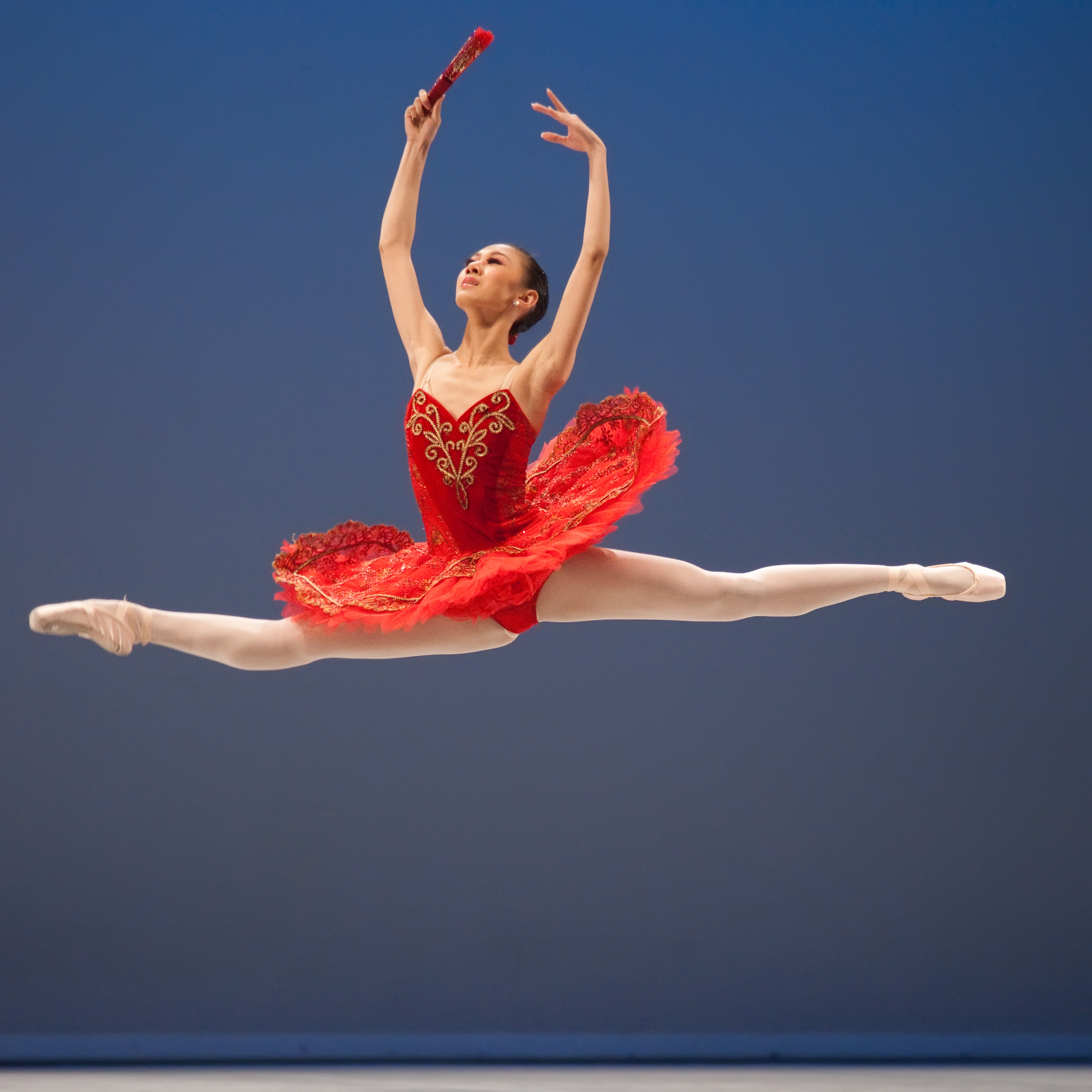
| Me going from the splits into a jump |
And just another reason why I am so keen on coding with students. Amazing problem-solving skills and hands on learning. And we didn't even use technology!!!
P.S. Afterwards one student said to me "I'd love to make real robots". Ah guess what kid? YOU CAN!! Hooked!
Saturday, February 28, 2015
#educampwelly
Oh wow. I am still on such an amazing high after today's Educamp Wellington.
In October last year at ULearn, a few interested educators from Wellington got together informally to discuss making a more formalised connection. From this WellyEd was born. In November we had our first meeting and decided to host an Educamp. We discussed the essence of what an Educamp was (free flowing, knowledge in the room, people connecting, discussions) and built our ideas on that. We spent the next few months planning and promoting the event proving that not only is it great to have a big team of people helping out but collaborating together is special all in itself. Today all that hard work paid off.
Full house here for #educampwelly pic.twitter.com/d7qspvwrgb
— Jess Weichler (@jlweich) February 27, 2015
To be honest it is always a bit nerve-wrecking when you are hosting an event. Especially one that has nothing planned! The Smackdown was a great way to start firing up some ideas.
#educampwelly coming together! pic.twitter.com/DCwpxyM8Sb
— Welly ED (@Welly_ED) February 27, 2015
And then it was systems all go!
The sessions that I attended were:
- Solo Taxonomy (lead by the wonderful +Sonya Van Schaijik)
- Minecraft (where +Steve Katene shared lots of his knowledge)
- Genius Hour (where I lead the discussion)
- Design Thinking (where I made +Matt Ives share all his knowledge)
Then we all shared some kai together thanks for Network 4 Learning (thanks +Tim Kong) and then hit the pub! The learning just never stops happening. All those informal conversations you have with people are so valuable.
My takeaway things to go and implement from today are:
- To start using Solo Taxonomy in my class (thanks +Sonya Van Schaijik)
- To hunt down "Notebook How To" the book suggested by +Tara Taylor-Jorgensen about slowing down writing
- To access the crowdsourced documents that +Anne Kenneally has collated and that @jackbillie35 shared.
- Add a creative commons to my blog (thanks +Diana-Grace Morris)
- Watching some stuff on Cell Storming (thanks +Matt Ives) and make myself some hexagons, laminated of course (thanks +Paula Hay)
- Read all the links that people have shared with me.
- Confirm a date for the WellyEd end of term drinks with my co-conspirator +Rebbecca Sweeney
- Organise a Maker Party for my class with Jess Weichler
- Start planning a road trip to #educampHB to see +Juliet Revell
Woah a big list I know but hey it's good to keep the energy and the connections going.
Thanks to everyone that attended today and shared their knowledge. Still the best professional development that money can't buy (because it's free!)
Subscribe to:
Comments (Atom)